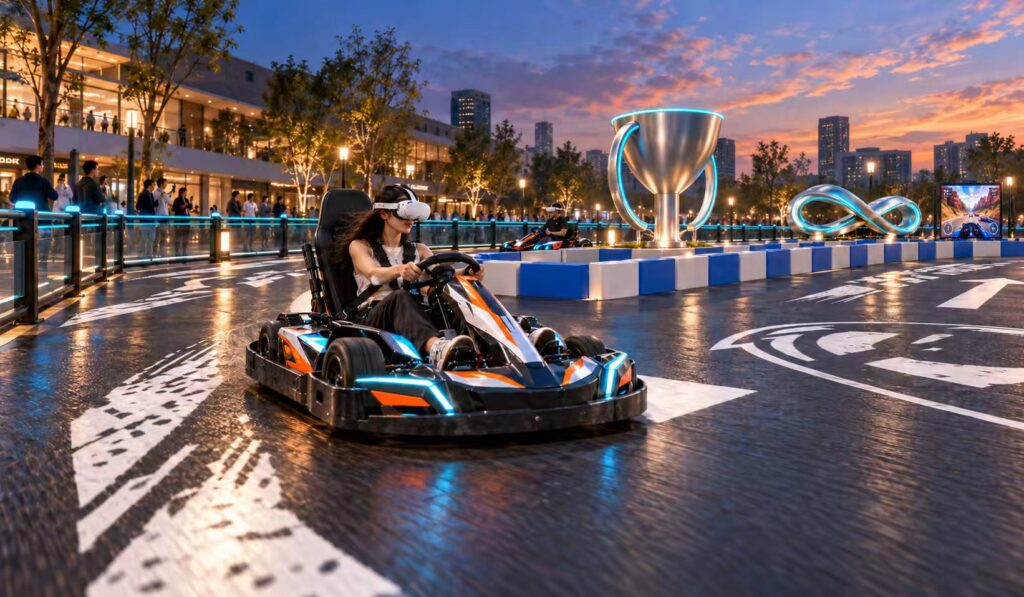
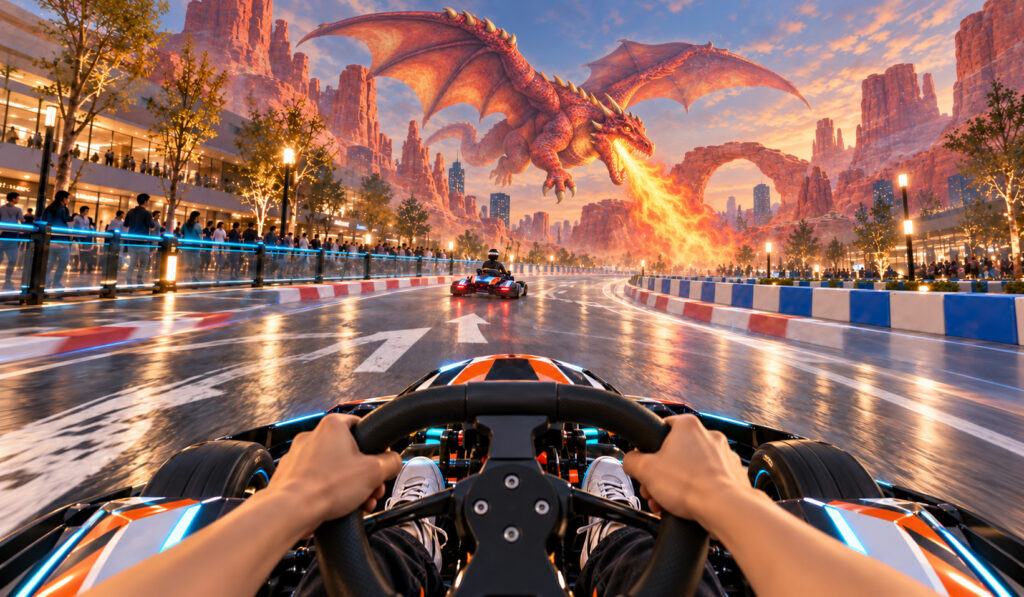
Passthrough headsets allow riders to keep seeing the physical track, karts and venue environment while game content is layered into the driving experience. This creates a mixed-reality format that can be engineered for indoor entertainment centers and selected outdoor venues.
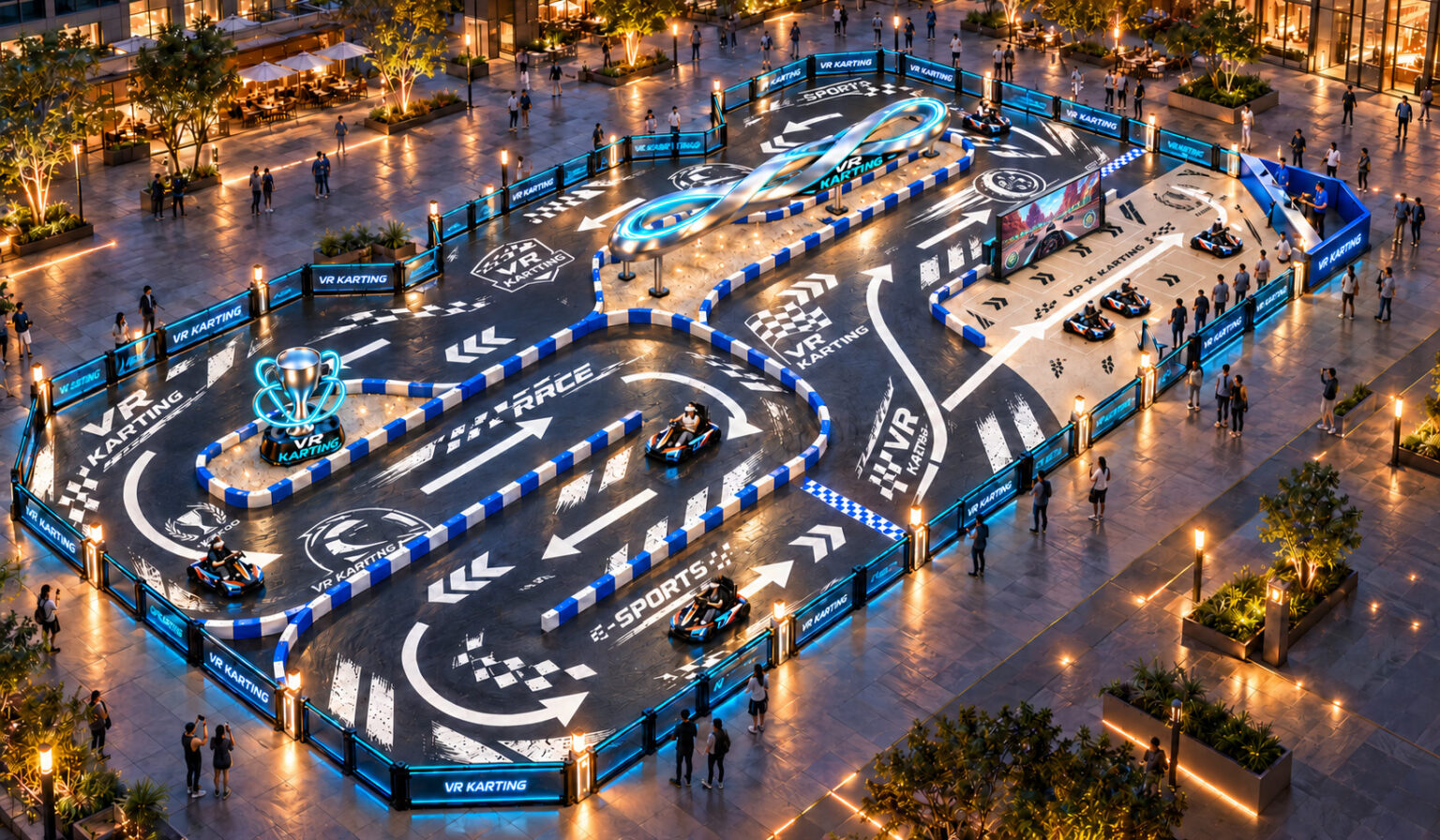
Client venue overview supplied by HoloKart XR / Guangzhou Guwei.
How passthrough mixed-reality karting works
Indoor and outdoor operation
Indoor entertainment venues
- Controlled lighting and weather conditions
- Defined network, charging and operator infrastructure
- Repeatable calibration and protected equipment zones
- Suitable for FEC and shopping-center attraction planning
Outdoor entertainment venues
- Sunlight, temperature and weather must be evaluated
- Wireless coverage and calibration require site testing
- Headsets, sensors and supporting equipment need protection
- Operating limits and shutdown procedures must be documented
Client venue video gallery
This mixed-reality interactive karting video shows real client venue examples, combining physical go-karts with an AR karting game layer for immersive entertainment venues.
Mixed-Reality Interactive Karting — Client Venue Cases
Watch real venue footage of an interactive go-kart experience designed for indoor entertainment and location-based attractions.
The additional client venue videos below are embedded from Facebook and do not autoplay. Playback is loaded only when the visitor reaches or starts a video.
Client Venue Experience 01
Real operating footage supplied by HoloKart XR / Guangzhou Guwei.
Client Venue Experience 02
Real operating footage supplied by HoloKart XR / Guangzhou Guwei.
Client Venue Experience 03
Real operating footage supplied by HoloKart XR / Guangzhou Guwei.
Client Venue Experience 04
Real operating footage supplied by HoloKart XR / Guangzhou Guwei.
Client Venue Experience 05
Real operating footage supplied by HoloKart XR / Guangzhou Guwei.
Client Venue Experience 06
Real operating footage supplied by HoloKart XR / Guangzhou Guwei.
Client venue image gallery
Safety and engineering requirements
Passthrough visibility does not remove the need for physical barriers, speed control, emergency stop procedures, trained operators and documented acceptance testing. Field of view, end-to-end latency, alignment stability, tracking recovery and headset behavior during faults must be tested using the final venue, karts and operating rules.
Final configuration requires site-specific engineering.
Planning an indoor or outdoor venue?
Request a site-specific review covering space, operating conditions, system architecture and acceptance testing.